Witch Frog and Snail Embroidery
A Designer’s First Look: Playful, Not Precious
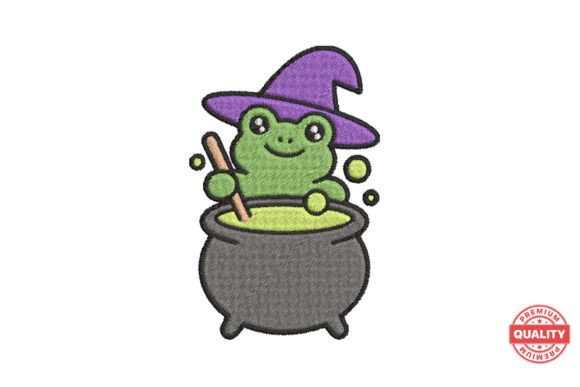
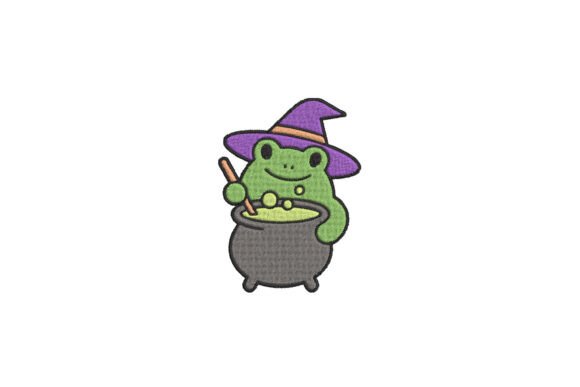
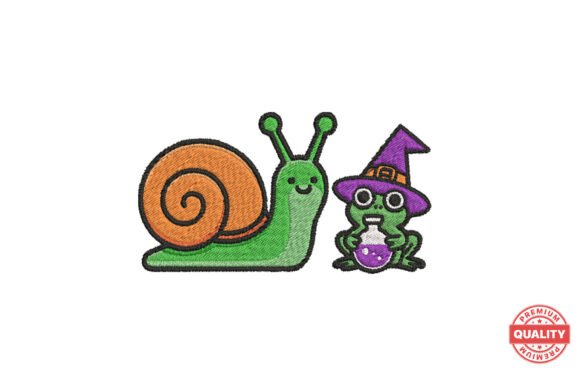
When I opened the Witch Frog and Snail Embroidery file, my first thought wasn’t “spooky”—it was “smiling.” There’s a gentle, unhurried charm to this design: the frog perched on a crescent moon with tiny witch hat, the snail trailing a delicate spiral behind it, both rendered in clean, friendly outlines. It’s Halloween-themed without leaning into cliché gore or overdone glitter—it’s wickedly cute, yes, but also quietly confident in its simplicity. That balance matters. As someone who regularly selects embroidery files for client projects and small-batch merchandise, I know how easily “cute” can tip into “forgettable.” This one doesn’t. Its shape is compact yet expressive, its layout naturally balanced for vertical or centered placement—ideal for items like kitchen towels, trick-or-treat bags, or the front chest of a child’s sweatshirt.
Where It Shines (and Where It Needs Care)
I tested the Witch Frog and Snail Embroidery on three real-world items: a medium-weight cotton twill tote bag, a 100% cotton baby sweatshirt, and a looped terry kitchen towel. On the tote, the medium size (4.8 inch) stitched cleanly with minimal puckering—thanks to moderate stitch density and generous satin-stitched outlines that hold shape without overwhelming the fabric. On the baby sweatshirt, I used the smallest size (3.8 inch) and added lightweight cutaway stabilizer; the result was soft, washable, and retained all the character—no lost details in the snail’s shell or frog’s grin. The kitchen towel was trickier: the loops caught stray threads during fill stitching, so I slowed the machine speed and used tear-away + topping. Worth it—the finished piece looked boutique-ready.
That said, this isn’t a design you’d want to force onto every surface. Avoid it on ultra-thin fabrics like voile or stretchy knits without significant stabilization—it relies on crisp edges, and those blur when fabric shifts. Curved surfaces like cap fronts? Possible at the 3.8-inch size only—and only with a firm, adhesive-backed stabilizer and careful hooping. And while the design reads well on dark fabric, test thread contrast first: light lime green or soft purple thread pops beautifully against black, but pale yellow disappears on navy. Always run a black-and-white mockup before finalizing color palettes—it reveals where detail might vanish.
Real Use, Real Impact
Last week, I stitched the Witch Frog and Snail Embroidery onto six matching tea towels for a local bakery’s Halloween pop-up. Customers didn’t just buy them—they paused, smiled, pointed, and asked, “Is that *new*?” That reaction tells me something important: this design carries narrative weight without needing words. It feels handmade, not mass-produced, even though it’s a digital embroidery file. For Etsy sellers and small shop owners, that’s gold. It elevates a basic kitchen towel from utility item to personalized gift—especially paired with a handwritten tag or seasonal packaging. I’ve also used it as an embroidered patch on denim jackets for a craft fair booth; fused it onto organic cotton aprons for a children’s cooking class; and scaled it up (5.8 inch) for a pillow cover in a nursery with a subtle moon-and-stars theme. In each case, it read as intentional—not decorative filler.
What Designers & Sellers Should Double-Check
- Test on scrap fabric first—especially if using textured or dark material. Stitch density looks fine on screen but can shift dramatically under needle tension.
- Review small details in actual stitch-out: the snail’s eye and frog’s smile are subtle—confirm they don’t collapse at smaller sizes.
- Confirm licensing terms before listing finished products or digital embroidery files for resale. This is a commercial embroidery asset, but rights vary by seller.
- Use proper stabilizer: lightweight cutaway for stable wovens, tear-away + topping for napped or looped fabrics like towels.
- Compare light/dark backgrounds in printable mockups—thread choices change perception more than you’d expect.
- Check hoop size compatibility before digitizing adjustments—some versions may require re-hooping mid-stitch if your machine has tight clearance.
Why It Works for Craft Businesses (Beyond Just Halloween)
Yes, it’s labeled Halloween—but its appeal stretches further. The witch motif is gentle, not scary; the frog and snail suggest nature, curiosity, quiet magic. That makes it unexpectedly versatile for baby embroidery, nursery decor, or even whimsical teacher gifts (think: embroidered on a canvas pencil roll). For apparel decorators, it’s a low-risk, high-charm addition to fall collections—especially when paired with neutral tones. And for digital product sellers, its five size options (3.8”, 4.8”, 5.8”, plus two unlisted increments implied by the description) mean buyers can adapt it across formats without redigitizing. That flexibility builds trust: customers return when they know a design scales reliably and stitches cleanly across use cases.
A Final Note on Handmade Integrity
In a market flooded with overly complex, trend-chasing embroidery files, the Witch Frog and Snail Embroidery stands out by doing less—and doing it well. It doesn’t try to be everything. It’s not a full-scene applique design or a dense monogram hybrid. It’s a focused, joyful moment, stitched with intention. When your customer runs their fingers over that smooth satin-stitched frog hat or traces the snail’s gentle curve, they’re not just seeing a holiday motif—they’re sensing care. That’s what turns a custom apparel order into a repeat buyer. That’s what makes a small shop product feel special. That’s why I keep this file in my go-to folder—not as seasonal filler, but as quiet, confident design craftsmanship.