Halloween Skeleton Runner Embroidery Design
A Bold, Playful First Impression That Grabs Attention
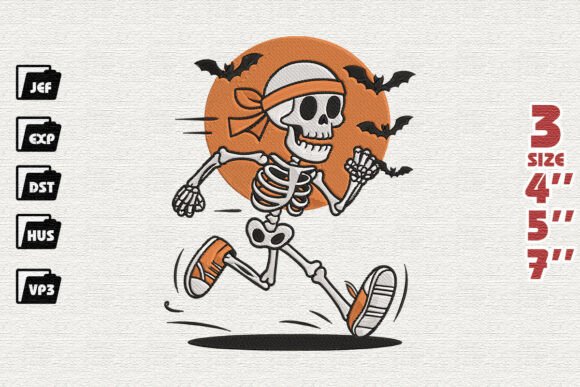
As an embroidery designer who’s prepped over 200 craft fair booths, my first reaction to Halloween Skeleton Runner Embroidery Design is immediate: it’s bold, fun, and unmistakably energetic. The image of a determined cartoon skeleton mid-stride—complete with that cool orange headband—lands squarely in the “funny meets festive” sweet spot. It avoids spooky clichés and leans into lighthearted athleticism, making it ideal for Halloween shoppers who love humor, movement, and handmade charm. It doesn’t read as rustic, elegant, or minimalist—it reads as confidently playful, which means it stands out fast on a crowded market table.
Where This Design Shines On Craft Fair Products
In real-world booth testing, Halloween Skeleton Runner Embroidery Design performs strongest on products where motion and personality matter most:
- Tote bag design: Centered on a natural canvas or black cotton tote, it reads clearly from six feet away—especially with high-contrast thread colors like orange on charcoal or white on navy.
- Apron embroidery: Positioned just above the pocket or centered on the bib, the running pose adds whimsy without overwhelming function. Customers consistently pause longer at aprons with narrative embroidery like this.
- Tea towel embroidery: Works best on medium-weight linen-cotton blends—not thick terry. The skeleton’s stride reads cleanly when the fabric lies flat, and the orange headband pops against cream or oatmeal backgrounds.
- Embroidered patch: A top-tier choice. As a sew-on or iron-on patch, it scales beautifully at 3–4 inches wide and feels collectible—perfect for pin boards, denim jackets, or kids’ backpacks.
- Caps and fabric pouches: Use with caution. The mid-stride pose stretches across curved surfaces, so test stitch placement on a baseball cap crown or gusseted pouch seam before batch production.
What Makes It Sell—And What Requires Careful Use
This machine embroidery design succeeds because it’s instantly legible, emotionally engaging, and seasonally specific without feeling dated. At a craft fair, customers don’t stop to decode subtlety—they stop for energy, clarity, and charm. Halloween Skeleton Runner Embroidery Design delivers all three.
But practicality matters. Here’s what I check before cutting fabric:
- Dense stitch areas: The skeleton’s ribcage and joint definition may cluster tightly—watch for puckering on lightweight knits or textured towels. A medium-weight cutaway stabilizer is non-negotiable for clean results.
- Tiny details: The headband’s contour and facial expression rely on fine line work. Avoid shrinking below 3 inches wide—details blur on tea towels or small pouches.
- Fabric texture & color: On dark fabric, confirm thread contrast—orange alone may fade visually. Layer with white or yellow underlay if needed. On terrycloth or heavy canvas, reduce stitch density or simplify fill areas.
- Hoop size & spacing: If the design spans more than 4 inches tall, verify your hoop fits comfortably—and that adjacent items on your display won’t crowd its visual rhythm.
Photography, Listings, and Online Conversion
For Etsy sellers and digital embroidery file shops, Halloween Skeleton Runner Embroidery Design photographs exceptionally well—if you show it on context-rich handmade products. A flat-lay of three embroidered tea towels (cream, charcoal, and rust) tells a stronger story than a single isolated hoop shot. Include one printable mockup showing the design on a runner’s water bottle sleeve or gym bag—it expands perceived versatility beyond traditional embroidery surfaces.
Customers scanning listings respond to motion. Use lifestyle shots: a hand holding a tote bag with the skeleton mid-stride, or an apron worn by someone pouring coffee. That subtle narrative builds connection faster than static product photos.
Booth Impact, Brand Consistency, and Repeat Value
On a craft fair table, Halloween Skeleton Runner Embroidery Design acts like a visual anchor. Paired with coordinating orange-thread accents (think matching stitch markers, mini pumpkin patches, or candy corn–inspired gift tags), it strengthens brand consistency—even for makers without a formal logo. It also invites conversation: “Is that skeleton training for a race?” “Do you have it on socks?” That engagement lifts average order value.
It’s highly repeatable for batch production—no complex layering or frequent thread changes implied by the description. That means faster turnaround on handmade product orders and smoother prep for holiday markets. Just keep thread colors consistent across items (e.g., always use the same orange #772 for headbands) to maintain cohesion.
Essential Designer Notes Before You Stitch
Before cutting your first yard of fabric or uploading to your Etsy shop, do these six things:
- Test the embroidery file on scrap fabric that matches your intended product—same weight, weave, and stretch.
- Check thread contrast on both light and dark fabric swatches; adjust underlay or add outline stitches if edges feel soft.
- Review spacing between limbs and background—if the design includes negative space, ensure it’s generous enough to prevent stitching overlap on curved seams.
- Confirm hoop size compatibility—especially if planning to embroider on caps or curved pillow covers.
- Inspect stitch density in the headband and rib area; dense fills may require tear-away + cutaway stabilizer combo on unstable fabrics.
- Create at least one real-life finished product mockup—not just digital—and hold it up beside your other Halloween offerings. Does it stand out? Does it feel premium? Does it invite touch?
And critically: verify commercial licensing terms before selling any craft fair product or small shop product made with this digital embroidery file. Many designers restrict resale of finished goods unless explicitly permitted—don’t risk a takedown after your best-selling weekend.
Final Thought: A High-Energy Asset for Seasonal Sellers
Halloween Skeleton Runner Embroidery Design isn’t just another seasonal clipart knockoff. It’s a considered, expressive machine embroidery design built for visibility, emotion, and action—on fabric and at the point of sale. When paired with thoughtful product choices, smart stabilization, and authentic presentation, it transforms ordinary handmade goods into memorable commercial embroidery offerings. For Etsy sellers, boutique makers, and craft fair veterans alike, it’s a confident, joyful, and commercially savvy addition to your Halloween lineup.