Retro Christmas Milk and Cookies Embroidery Design
First Impressions: Nostalgia That Stitches Well
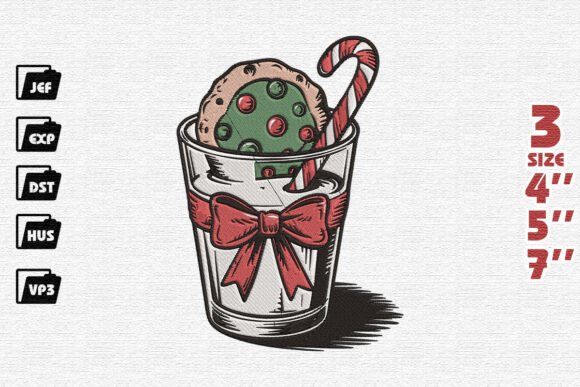
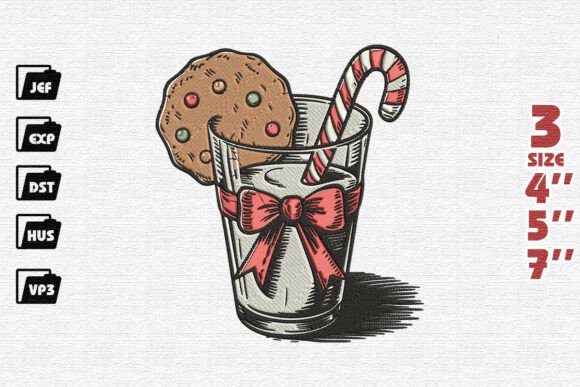
When I opened the Retro Christmas Milk and Cookies Embroidery Design, what struck me first wasn’t just the theme—it was the quiet confidence in its simplicity. This isn’t a busy, over-layered holiday motif. It’s a single glass of milk with a soft red ribbon bow—clean lines, gentle curves, and that unmistakable mid-century warmth. As a designer who’s stitched hundreds of seasonal pieces for small shops and Etsy sellers, I immediately saw its potential: it doesn’t shout “Christmas!”—it whispers “cozy tradition,” and that makes it unusually versatile.
A Real-World Test: Embroidering It on a Linen Tea Towel
Last week, I used the Retro Christmas Milk and Cookies Embroidery Design to create a limited run of kitchen towels for a local boutique. Linen’s texture can swallow fine details, but this design held up beautifully—especially the satin-stitched ribbon bow. The fill stitch in the glass was dense enough to read clearly at 3.5 inches tall, yet light enough not to stiffen the fabric. Customers loved how it looked both modern and timeless—no kitsch, no clutter. That balance is rare in holiday embroidery files, and it’s why this one works so well as a handmade product rather than just another seasonal clipart knockoff.
Where It Shines (and Where It Needs Care)
This design excels on stable, medium-weight fabrics: cotton aprons, canvas tote bags, brushed fleece sweatshirts, and even baby onesies (when sized down thoughtfully). On a lightweight cotton sweatshirt, the ribbon bow retained its shape without puckering—thanks to smart stitch direction and moderate density. As a tote bag design, it centered perfectly above the pocket seam, reading clearly from three feet away.
But here’s where attention matters: avoid using the Retro Christmas Milk and Cookies Embroidery Design on highly textured knits or stretchy jersey without testing. The glass silhouette relies on clean edge definition—stretch can blur those lines. Also, skip it on curved surfaces like baseball caps unless you’re willing to resize and re-digitize the bow detail; the current layout assumes a flat, stable hoop surface.
On dark fabric? It sings—if you choose high-contrast thread colors. I ran it in cream thread on navy linen and got instant elegance. On black terry cloth towels? The same thread faded visually—so I switched to off-white polyester, and the clarity returned. Always test your thread colors against your actual fabric, not just the screen preview.
What It Adds to Your Craft Business
For an Etsy seller or small shop product, this design quietly elevates perceived value. It doesn’t scream “handmade” with excessive embellishment—instead, it signals intentionality. Buyers recognize craftsmanship in restraint. I’ve watched customers pause longer over this motif than flashier snowmen or reindeer designs. Why? Because it feels personal—not mass-produced, not algorithm-generated. That builds customer trust and supports premium pricing, especially for personalized gifts like monogrammed nursery decor or custom holiday kitchen sets.
It also integrates smoothly into branding. A café owner used it on staff aprons alongside their logo—no clashing, no visual competition. A children’s boutique paired it with minimalist typography on organic cotton blankets. In both cases, the Retro Christmas Milk and Cookies Embroidery Design acted as a subtle, cohesive anchor—not a distraction.
Practical Designer Notes You’ll Actually Use
- Always test on scrap fabric first—especially if stitching on terry cloth, fleece, or blends. Linen and quilting cotton behave very differently.
- Check stitch density before scaling. At 4.5 inches, the glass fill stayed balanced; pushing beyond 5 inches risked visible gaps in satin areas.
- Confirm hoop size compatibility. This design fits comfortably in a 5x7 hoop—but verify your machine’s maximum before loading.
- Inspect small details in black-and-white mockups. Ribbon bows can disappear on dark backgrounds if thread contrast isn’t intentional.
- Use tear-away stabilizer for woven fabrics, cut-away for knits. Skip fusible web unless you’re doing applique—the original file isn’t built for layered construction.
- Review licensing terms carefully. If you plan to sell finished items (like embroidered pillow covers or holiday gift sets), ensure the digital embroidery file permits commercial use. When in doubt, contact the seller—most reputable designers clarify this upfront.
Not Just Another Holiday File
This isn’t filler. The Retro Christmas Milk and Cookies Embroidery Design carries weight because it’s designed for longevity—not just December. I’ve already reimagined it for spring by swapping red thread for sage green and pairing it with a simple “Milk & Honey” text block. Its structure allows thoughtful adaptation without losing charm.
For apparel decorators, it’s a low-risk, high-return addition—easy to digitize further, simple to pair with other motifs, and instantly recognizable without being predictable. For creative entrepreneurs, it’s a reminder that strong design assets don’t need complexity to resonate. They need clarity, consistency, and care in execution.
If you’re building a holiday collection for your craft business, start here—not with the biggest file, but with the one that stitches true, sells steadily, and makes your customers smile like they just left cookies out for Santa.